

Musah Superior writes: This is an important reminder of Articles 58 and 60 of the 1992 Constitution 👇
12, 1, 2026
264
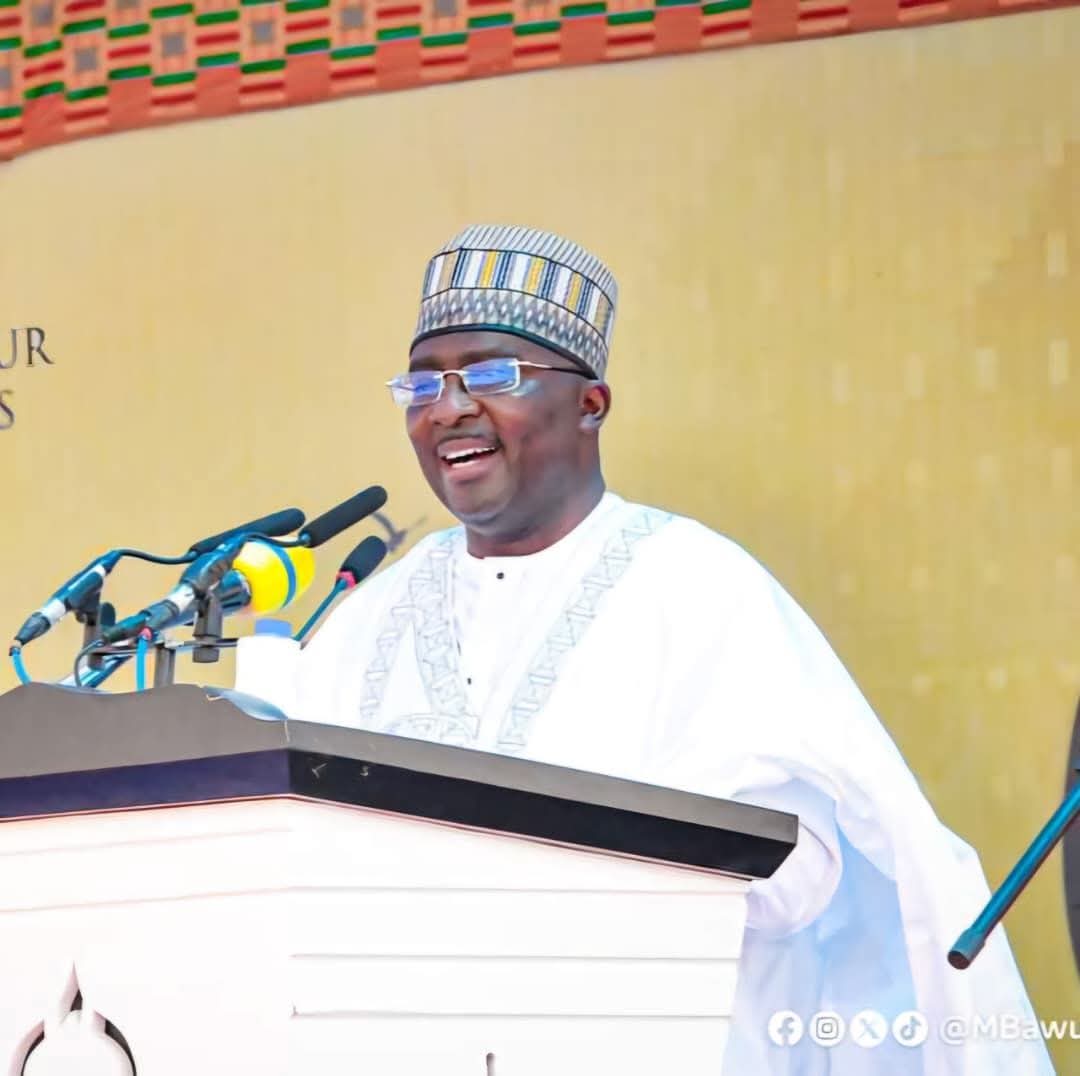
If one seeks to conduct an objective analysis of a Ghanaian Vice-President, it is proper and fair to carefully read Chapter Eight of the 1992 Constitution. In doing so, particular attention must be paid to the entirety of Articles 58 and 60.
Article 58 vests the Executive Authority of Ghana in the President, while Article 60 clearly outlines the functions of the Vice-President and the rules governing succession to the Presidency. A careful rereading of Article 60(1) alone should help resolve much of the confusion surrounding the role, power, and authority of the Vice-President.
Constitutionally, the Vice-President exercises no independent executive authority. The Constitution deliberately positions the Vice-President as an auxiliary to the President, not as a co-executive authority. The office carries no autonomous executive power; all executive authority flows from the President. This constitutional arrangement makes all Vice-Presidents structurally constrained in terms of direct authority within Ghana’s governance framework. Their effectiveness is therefore dependent not on constitutional power but on delegation, trust, competence, and political relevance within an administration.
Some have questioned how former Vice-President Dr. Mahamudu Bawumia (DMB) could have spearheaded major initiatives such as the Ghana Card, Mobile Money Interoperability, Ghana Goes Digital, G4R, G4O initiatives, and other digitisation programmes if he truly lacked authority. The answer is simple: DMB was not an ordinary Vice-President. Foremost, he was conspicuous because he could not be ignored, and by virtue of competence, clarity of vision, and intellectual leadership, he became indispensable to the Akufo-Addo administration. His influence did not arise from constitutional power but from capacity, innovation, and relevance. In that sense, his impact was unprecedented in Ghana’s vice-presidential history.
If anyone genuinely wishes to assess whether Dr. Mahamudu Bawumia has the competence to manage Ghana’s economy, the fair test will come when he occupies the office that actually wields executive authority—the Presidency, as provided under Article 58 of the Constitution.
Until then, constitutional honesty demands that we judge him not by powers he never had, but by the extraordinary impact he made despite those limitations.
Powered by Froala Editor