
Dr. Bawumia: The Leader Ghana Needs in Times of Crisis Written by Ing. Alex Zack Kweku Tio
5, 7, 2026
74
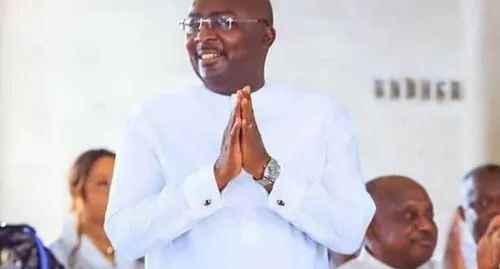
In moments of national crisis, true leadership is measured not by slogans but by action, empathy, and restraint. Ghana’s recent flooding — from the overflow of the Black Volta in Buipe to the Akosombo Dam spillage affecting communities in the Volta, Greater Accra, and Eastern Regions — has tested that standard. And Vice President Dr. Mahamudu Bawumia’s response offers a clear example of leadership that puts people before politics.
1. De-politicizing disaster: A call for unity over partisanship
Floods don’t ask for party cards. They displace NPP and NDC supporters alike. Recognizing this, Dr. Bawumia has consistently framed flooding as a national emergency, not a political talking point.
During his visit to flood-hit communities on June 30, 2026, he urged government to consider a state of emergency if forecasts showed more heavy rainfall, and called for “a united, non-partisan approach” bringing together engineers, hydrologists, and disaster experts regardless of political affiliation. In October 2023, after the Akosombo spillage, he told victims: “We are not only looking at temporary relief, we are also looking at a more sustained support… so that those affected can restore their livelihoods.” The message was continuity and recovery, not blame. 78cc
He’s also appealed to Ghanaians to follow official safety directives. In a June 2026 message, Dr. Bawumia urged compliance with NADMO, Ghana Fire Service, and Police protocols, asking citizens to dial 112 for emergency assistance and calling on emergency services to “do everything possible to reach those in need”. Leadership in a crisis means reinforcing institutions, not undermining them.
2. On the ground: Matching words with relief
Beyond statements, Dr. Bawumia has been present with tangible support — often from his personal resources.
Buipe, September 2023: After the Black Volta overflow displaced thousands, he donated 50 bags of rice, 20 cartons of cooking oil, and 50 cartons of bottled water to Central Gonja District victims.
Akosombo Dam spillage, October 2023: He personally gave GH¢160,000 to displaced victims in the Volta Region to complement government/NADMO efforts.
West Mamprusi, North East Region: Earlier, he presented GH¢100,000 plus maize, rice, cooking oil, milk, mattresses, and mosquito repellent to flood victims.
July 2026 floods: Multiple reports show deliveries of hundreds of bags of rice, Jingo and Verna bottled water, drinks, and black foam mattresses to Bortianor–Ngleshie Amanfrom and Anyaa Sowutuom. ec4278cc3dbcpost-927399813918629524013post-376513078646663697862
These aren’t photo-ops. In the Upper East and West Regions, he inspected damaged houses, commiserated with bereaved families, and pledged government commitment to fix broken bridges and build flood control dams. 0989
3. The attitude that matters: Empathy, accountability, and forward planning
Three traits stand out in Dr. Bawumia’s flood response:
Empathy first: “When I look into the eyes of our mothers, fathers, sisters, and brothers who are seated here, I see so much sadness… now they have to really depend on others for livelihood, and I am saddened by that.” 78cc
Systems thinking: He’s repeatedly tied relief to prevention. After donating in the North, he noted plans to construct the Pwalugu Dam to address perennial flooding. In June 2026, he stressed both immediate interventions and “long-term flood prevention strategies”. 3dbc
Personal responsibility: While government machinery moves, he’s used personal funds and presence to bridge gaps. That signals to citizens that leaders shouldn’t wait for bureaucracy when people are sleeping in classrooms.
Why this is the leadership Ghana needs
Ghana’s climate realities mean floods will return. The question is whether we have leaders who:
Unite rather than divide when water rises.
Reinforce public institutions by urging citizens to follow NADMO and emergency protocols.
Show up — with policy and with mattresses, rice, and water.
Criticism exists — some online question motives or aid distribution. That comes with public life. But the pattern across years, from 2018 in the North to 2026 in Accra, is consistent: respond quickly, avoid politicization, support state agencies, and deliver help.
Crises reveal character. Dr. Bawumia’s approach to flooding — measured words, institutional respect, and hands-on relief — reflects a model of leadership grounded in service. And for a country facing complex 21st-century challenges, that model matters.
“We will get through this difficult time by caring for one another. May God bless our homeland, Ghana.”
Powered by Froala Editor