

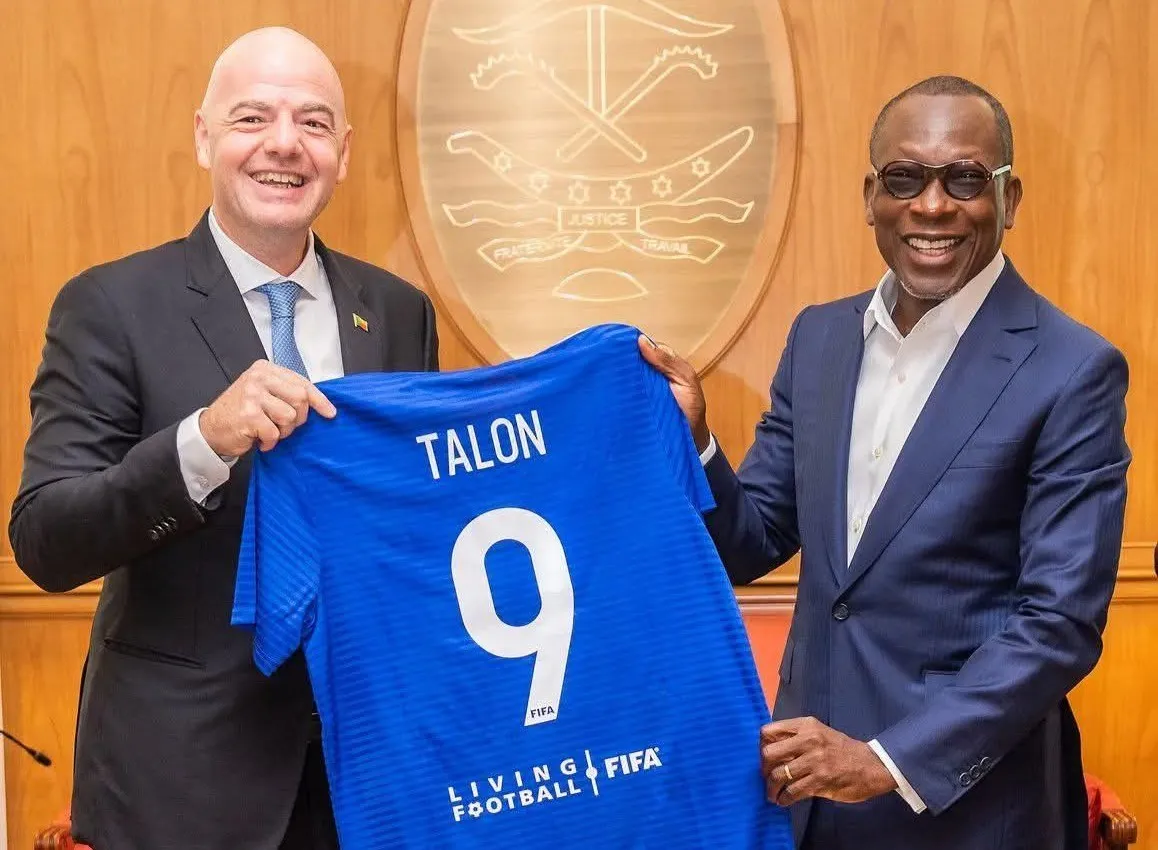
FIFA has selected Benin to produce jerseys for the 2026 World Cup
14, 4, 2026
212
This is not just a sports story. It is an agribusiness and industrial policy story, and West Africa should study it carefully.
Benin is Africa's largest cotton producer, with cotton accounting for roughly 40% of GDP. For decades, that cotton left Benin as a raw commodity, with value added elsewhere. What changed?
The government built the GDIZ - Glo-Djigbé Industrial Zone (#GDIZ), a 1,640-hectare vertically integrated textile park, 45km from Cotonou, developed in partnership with ARISE IIP. GDIZ - Glo-Djigbé Industrial Zone hosts Bénin Textile SA (Btex), described as the world's largest eco-responsible textile park, and encompasses the full cotton value chain, from spinning and knitting through to dyeing, finishing, and garmenting.
FIFA's "Made in West Africa" initiative announced by President Infantino at the WTO Ministerial Conference in Abu Dhabi and confirmed after a site visit by WTO Director-General Ngozi Okonjo-Iweala is the commercial validation of that infrastructure investment.
The lesson for West African agribusiness policymakers is structural, not ceremonial. Cotton is grown across #Ghana, #CôtedIvoire, #Mali, #BurkinaFaso and #Chad. The C4+ countries collectively account for 60% of Africa's cotton output. Yet the overwhelming share of that output has historically been exported as lint, unprocessed, low-margin, and price-taker at global commodity markets.
Benin's GDIZ model demonstrates that the infrastructure conditions for value addition are buildable, financeable (the first phase targets $1.4 billion in investment and 300,000 jobs by 2030), and globally competitive when built to scale.
For Ghana specifically, this moment carries an additional resonance. As Ghana accelerates its own agro-industrialisation agenda from tomato processing to rice milling to cashew value addition, the Benin cotton model is the clearest regional proof point that raw commodity dependence is a policy choice, not a geographic destiny.
A World Cup jersey bearing a "Made In West Africa - MIWA" label is more than a branding milestone. It is the visible output of a deliberate decade-long investment in moving up the value chain.
The question for every cotton-producing country in the region is; what is our own GDIZ?
Source: https://africaglobalnews.com/fifa-selects-benin-produce-2026-world-cup-jerseys/
#rdcdiaries #agribusiness #westafrica #cottonvaluechain #Benin #FIFA2026 #Industrialisation #AgriculturalPolicy #Ghana #MadeInAfrica #ResearchDeskConsulting
Powered by Froala Editor